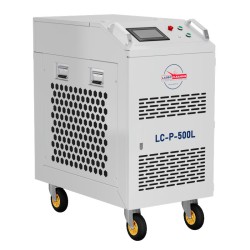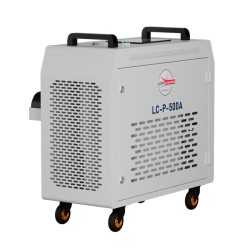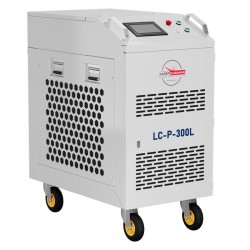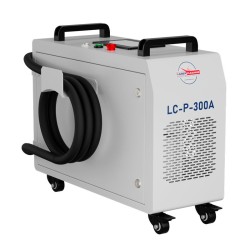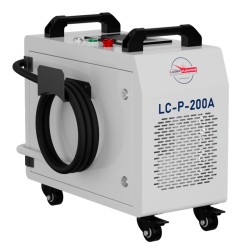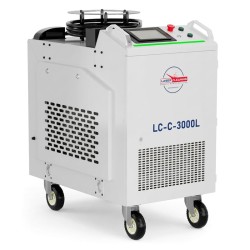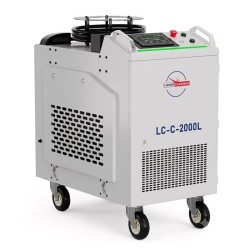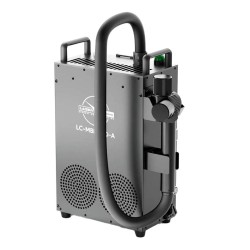
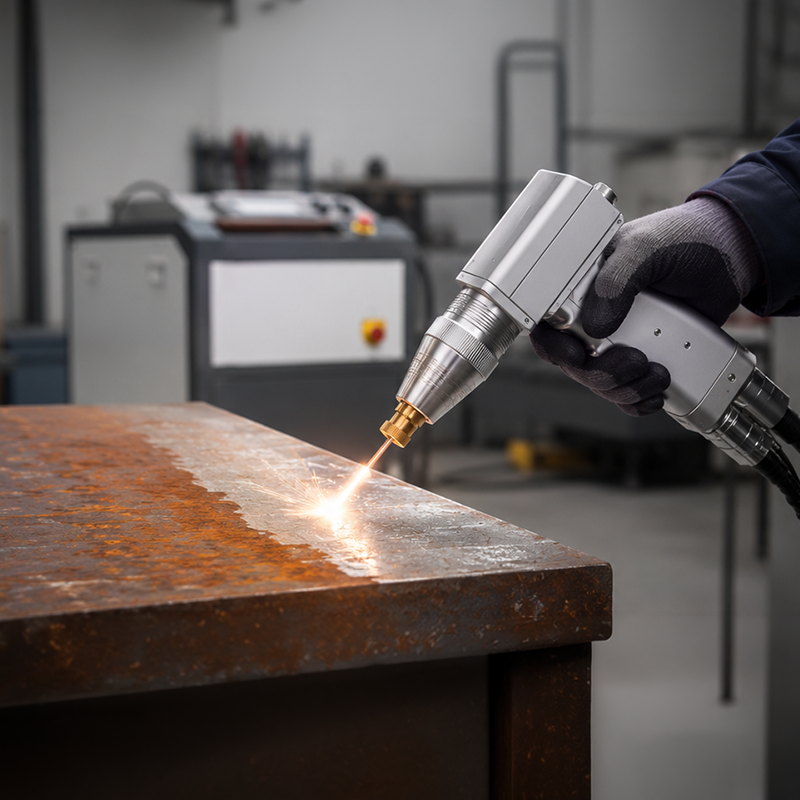
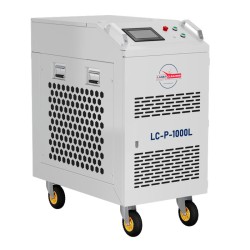
Professional laser cleaners allow you to remove rust, paint, oxides, scale and other contaminants from surfaces through a non-contact cleaning process.
Laser cleaning technology is used in numerous industrial, artisanal, and restoration sectors because it allows for precise and selective intervention, reducing the use of abrasives, chemical solvents, and other consumables.
A laser cleaner can be used for a variety of operations, including:
rust removal;
laser paint stripping;
removal of oxides;
calamine removal;
cleaning welds;
removal of industrial contaminants;
surface preparation before painting or welding;
selective cleaning of metal components;
In this guide we will see how to choose a laser cleaner , what the differences are between pulsed and continuous wave lasers and which power is best suited to different applications.
Which laser cleaner should I choose?
The choice of a laser cleaner depends on the surface to be treated : generally speaking, it can be said that a 200 W machine may be more suitable for precision work , while a 2000 or 3000 W system is more suitable when it is necessary to intervene quickly on very large surfaces .
The choice of the most suitable laser cleaner depends mainly on four factors:
1. Material and surface to be treated
If the goal is to perform precise and selective cleaning , for example to remove surface oxidation, light rust, paint or other contaminants without aggressively intervening on the underlying material, it is generally advisable to choose a pulsed laser cleaner , suitable for having a high level of control over the process and when the result is more important than the speed of removal.
However, if you need to work on large surfaces , remove significant quantities of rust, scale, paint or coatings and your priority is speed of processing, a high-power continuous wave laser cleaner may be more suitable.
2. Dimensions of the Surface to be Treated
For cleaning small components , welds, molds or localized areas, a 200 or 300 W pulsed laser is sufficient, especially if precision is a priority.
For larger surfaces or for frequent professional use, it is advisable to go up to 500 or 1000 W, in order to reduce processing times.
However, when large metal structures, large industrial surfaces or numerous pieces in succession need to be treated, it is advisable to evaluate a 2000 or 3000 W system, designed to prioritize productivity.
3. Geometry and Accessibility of the surface
For small or easily positioned components in the workshop, a standard fixed machine may be sufficient. However, if you need to work on more difficult-to-reach areas or large structures, it's advisable to consider a solution that prioritizes mobility and ease of transport.
4. Amount of work to be done
For occasional use or when processing a small number of parts, choosing a very powerful machine may be an unnecessary investment. However, if the laser cleaner will be used daily, for many hours, or on a large number of components, productivity becomes a key factor.
Pulsed or Continuous Wave laser
Pulsed Laser Cleaner
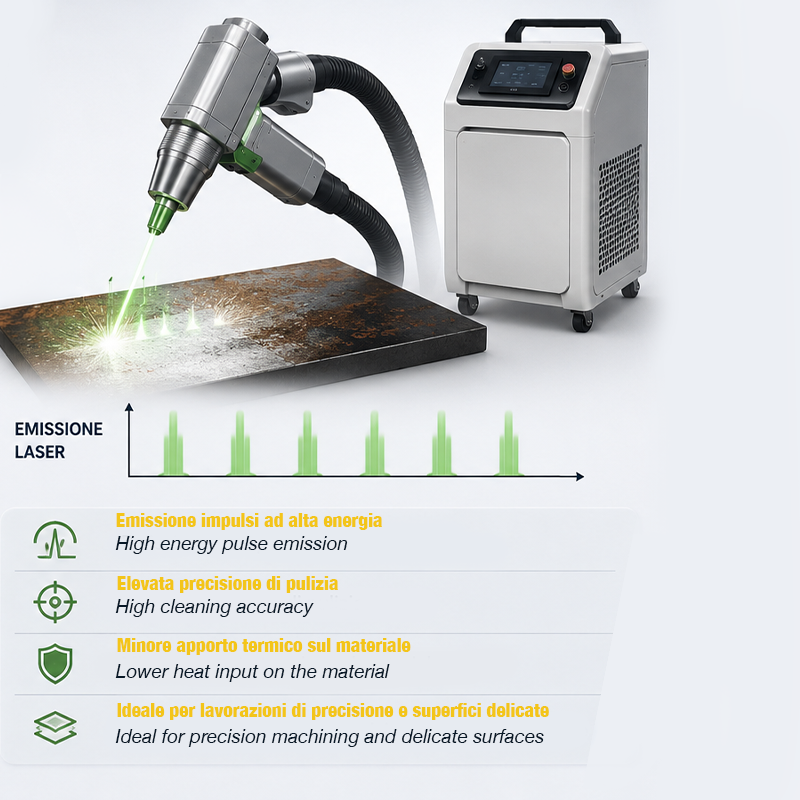
The pulsed laser emits energy through extremely short, concentrated pulses. This technology is generally indicated when the following are required:
high precision;
selective cleaning;
accurate control of the transferred energy;
work on delicate components;
controlled removal of oxides, paints and contaminants.
Continuous Wave Laser Cleaner
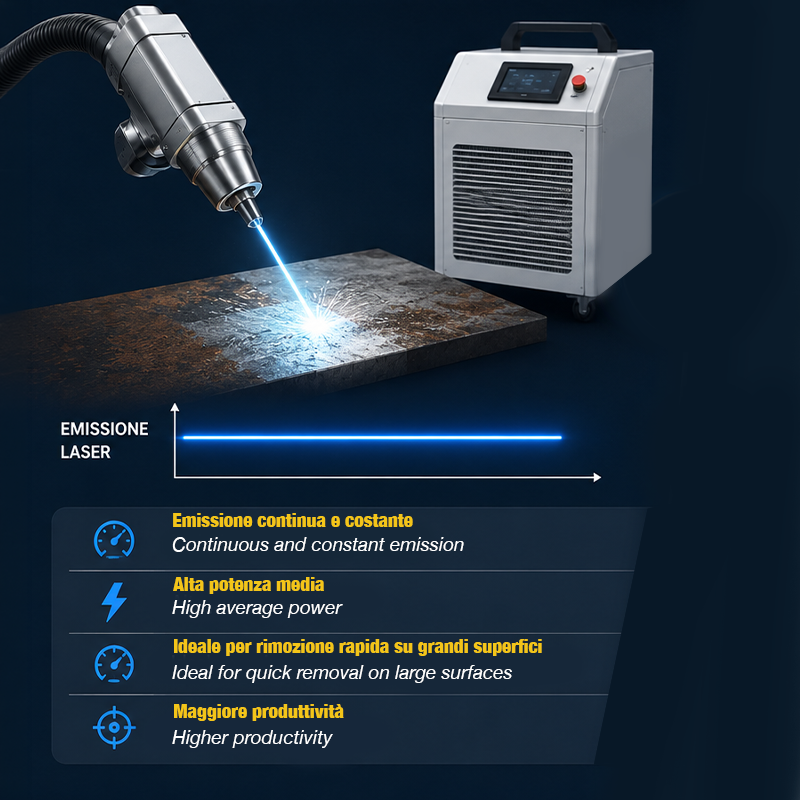
Often referred to as CW, this system uses continuous laser emission, generally oriented towards more intensive machining and the cleaning of larger surfaces, where productivity and feed rate are of primary importance. High power systems can therefore be indicated for:
industrial pickling;
removal of coverings;
treatment of large surfaces;
repetitive production processes;
integration into production lines and automation;
Which power should you choose?
A more powerful machine isn't automatically the best solution for every application. It's also important to consider the type of laser source, the surface to be treated, the size of the work area, and the required level of precision.
INDICATIVE POWER
MAIN APPLICATIONS
200 W
Precision cleaning, small components and localized machining
300 W
Greater versatility for removing oxides, paints and contaminants
500 W
Professional applications with higher productivity needs
1000 W
Industrial processes and more intensive cycles
2000 W
Pickling and treatment of larger surfaces
3000 W
High productivity and large surface industrial applications
The final choice must however be made considering the material and the specific workmanship.
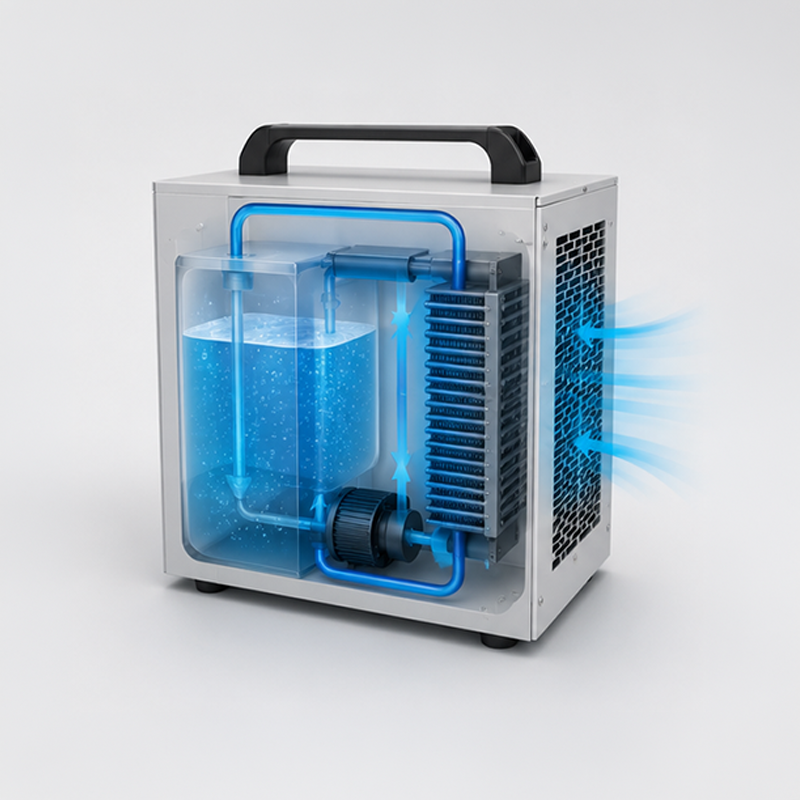
Air or water cooling?
The cooling system influences the choice of machine.
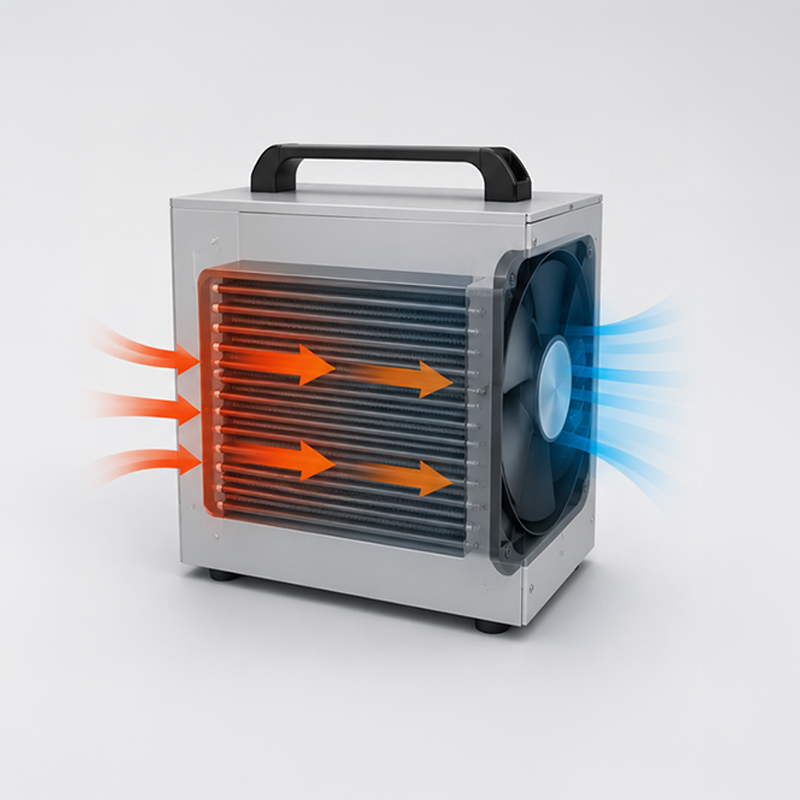
Air cooling
An air-cooled machine can offer greater ease of management and be particularly interesting for mobile applications or where extremely intensive work cycles are not required.
Water cooling
Water cooling is typically used in machines designed for more demanding and continuous operations. It can help maintain stable operating conditions during extended work cycles.
Why Choose a Laser Cleaner
Contactless cleaning
Greater precision
Reduction of consumables
Possibility of automation
FAQ: Frequently Asked Questions about Laser Cleaners
How many watts does it take to remove rust with a laser?
There is no ideal power that is valid for every situation: for small surfaces or precision machining, a low-power laser cleaner may be sufficient, while for faster machining or large surfaces, higher power may be necessary.
Does laser cleaner damage metal?
When used correctly and with appropriate parameters, a laser cleaner can selectively remove contaminants, oxides, or coatings. However, excessive power or settings unsuitable for the material can affect the treated surface. For this reason, it is essential to correctly adjust the operating parameters and, whenever possible, perform a preliminary test on a sample of the material.
What materials can be cleaned with a laser?
Laser cleaning is primarily used on metal surfaces, such as steel, stainless steel, iron, and other industrial materials. However, the feasibility of using the laser and the results achieved depend on the material's composition, the type of contaminant, and the surface characteristics. For specific applications, it is advisable to evaluate the process's compatibility beforehand.
Does a laser cleaner require consumables?
Laser cleaning typically doesn't use abrasives like sand or grit to perform the process. This can reduce the need for consumables compared to some traditional systems.
The Indors range includes professional pulsed and continuous wave fiber laser cleaners with various power ratings and configurations. Compact and portable models are available, as are professional air- or water-cooled systems and high-power solutions for industrial applications and laser pickling. If you're unsure which laser cleaner to buy or whether it's right for your needs, contact our support team: our technicians will help you choose.