



 AlphabeticalBrands
 Close
Close


On Sale
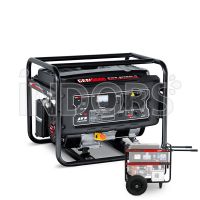
GENMAC G4000 - 4 kW AVR Generating Set
230V - 4 kW (kVA)
270 cc - 7,60 HP
BENZINA 4 TEMPI
270 cc - 7,60 HP
BENZINA 4 TEMPI
€649.00
€699.00
-€50.00
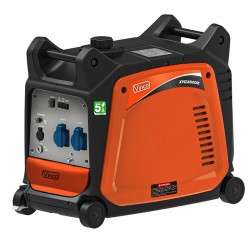
VINCO 60157 - Inverter Generator Set 3 kW Wheeled
230V - 3 kW
149.5 cc - 5.6 HP
4-STROKE GASOLINE
149.5 cc - 5.6 HP
4-STROKE GASOLINE
€630.71
€663.90
-5%
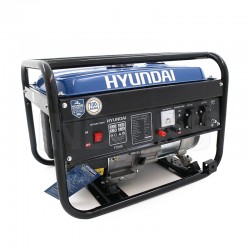
Hyundai 65122 PT 3000 - Power Generator - 3 kW Open
230V - 2.84kW
6.50 HP
4 STROKE PETROL
6.50 HP
4 STROKE PETROL
€279.00
€329.00
-€50.00
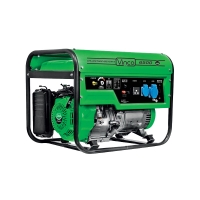
VINCO 60171 - 5 kW Ecofriendly Gas Generator Set
230V - 5.8 kW Petrol, 5.5 kW LPG, 5.3 kW Methane
389 cc - 13 HP
PETROL, LPG, 4-STROKE METHANE
389 cc - 13 HP
PETROL, LPG, 4-STROKE METHANE
€759.05
€799.00
-5%

GENMAC G8000E-T 3PH - Generatore 230V/400V FULL POWER 8,5 KW
230V/400V - 8.5 kW
500 cc
4-STROKE PETROL
500 cc
4-STROKE PETROL
€1,090.00
€1,140.00
-€50.00
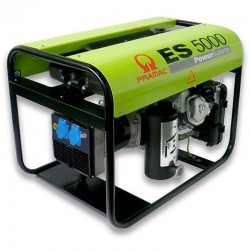
Pramac ES5000 - 5.1 kW Generator - AVR Version Available
230V - 5.1kW
5.2 HP
4 STROKE PETROL
5.2 HP
4 STROKE PETROL
€1,139.00
€1,239.00
-€100.00

Pramac ES8000 - Petrol Generator - AVR Version Available
230V - 7.2kW
7.3 HP
4 STROKE PETROL
7.3 HP
4 STROKE PETROL
€1,800.00
€2,000.00
-€200.00

Genset MG 3000 I-BE - Generatore Benzina 3 kW
230V - 3 kW
4.3 HP
4-STROKE PETROL
4.3 HP
4-STROKE PETROL
€745.00
€825.00
-€80.00
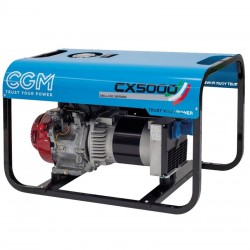
CGM CX5000 - Honda Petrol Engine Generator
230V - 5,5 kW
270 cc - 6,2 HP
BENZINA 4 TEMPI
270 cc - 6,2 HP
BENZINA 4 TEMPI
€1,577.00
€1,660.00
-5%
Best Sellers
Hyundai 65122 PT 3000 - Power Generator - 3 kW Open
230V - 2.84kW
6.50 HP
4 STROKE PETROL
6.50 HP
4 STROKE PETROL
€279.00
€329.00
-€50.00
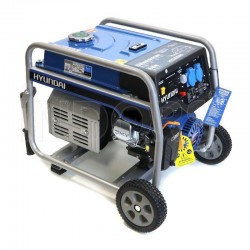
Hyundai Dynamic 65010 - 3 kW Single Phase Power Generator
230V - 2,8 kW
196 cc - 6,50 HP
BENZINA 4 TEMPI
196 cc - 6,50 HP
BENZINA 4 TEMPI
€299.90
Hyundai Dynamic 65011 - 3.5 kW Petrol Power Generator
230V - 3,5 kW
212 cc - 7,50 HP
BENZINA 4 TEMPI
212 cc - 7,50 HP
BENZINA 4 TEMPI
€369.90
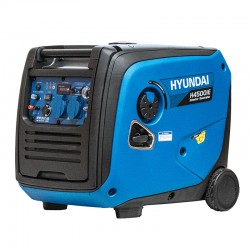
Hyundai 65158 - 4 kW Super Silent Inverter Generator
230V - 4.5 kW
223 cc - 7.5 HP
4-STROKE PETROL
223 cc - 7.5 HP
4-STROKE PETROL
€999.00
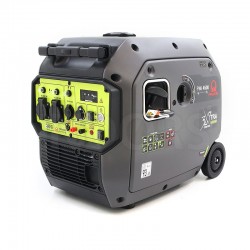
Pramac PMI4500 - 4.2 kW Inverter Generator - with Remote Control
230V - 4.2 kW
5.6 HP
GASOLINE
5.6 HP
GASOLINE
€779.00

Pramac PMi1000 - Generatore Inverter 1 kW
230V - 1kW
50cc
4 STROKE PETROL
50cc
4 STROKE PETROL
Price on Request
description Quotation Request

Pramac WX 3200 - Portable 3 kW Petrol Generator
230V - 2.85 kW
208 cc - 5.5 HP
4-STROKE PETROL
208 cc - 5.5 HP
4-STROKE PETROL
€395.00
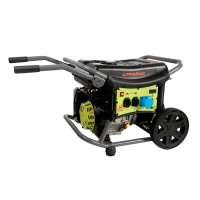
Pramac WX 6200 - 6 kW Trailer-Mounted Generator
230V - 5.8 kW
420 cc - 7.7 HP
4-STROKE GASOLINE
420 cc - 7.7 HP
4-STROKE GASOLINE
€683.00
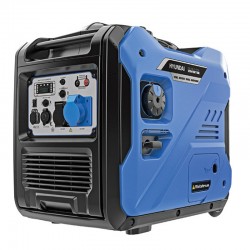
Hyundai 65159 - Generator Inverter Technology 5.5 kW
230V - 5,5 kW
232 cc - 6,7 HP
BENZINA 4 TEMPI
232 cc - 6,7 HP
BENZINA 4 TEMPI
€1,369.90
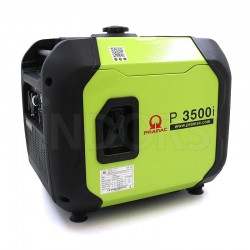
Pramac P3500i - Silent Inverter Generator
230V - 3.3 kW
212 cc - 4-stroke petrol
Powerrush Technology - Silent
212 cc - 4-stroke petrol
Powerrush Technology - Silent
€973.00
GENMAC G6000E - 4-Stroke Power Generator 6 kW
230V - 6 kW (kVA)
420 cc - 15,00 HP
BENZINA 4 TEMPI
420 cc - 15,00 HP
BENZINA 4 TEMPI
€829.00


VINCO 60104 LT950DC - 1 kW Single-Phase Portable Generator
230V - 1 kW
63 cc - 2.8 HP
2-STROKE MIXTURE
63 cc - 2.8 HP
2-STROKE MIXTURE
€139.90

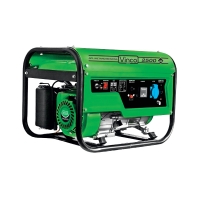
VINCO 60170 - Petrol+LPG+Methane+Gas Generator
230V - 3.5 kW Petrol, 3 kW LPG, 2.8 kW Methane
212 cc - 7.5 HP
PETROL, LPG, 4-STROKE METHANE
212 cc - 7.5 HP
PETROL, LPG, 4-STROKE METHANE
€326.90
New Arrivals
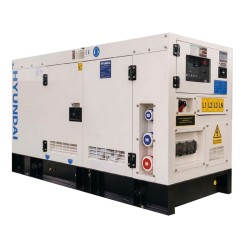
Hyundai 65572 - 1500 RPM Stage V 55 kVA Generator
230/400V - 18.33÷55 kW
3000 cc
DIESEL
3000 cc
DIESEL
Price on Request
description Quotation Request
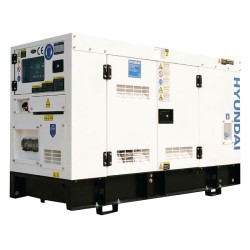
Hyundai 65568 - Silenced Generator 30 kVA 1500 RPM
230/400V - 10÷30 kW
2000 cc
DIESEL
2000 cc
DIESEL
Price on Request
description Quotation Request
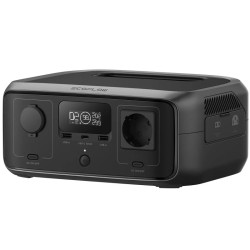
Ecoflow River 3 - Portable Power Station 245 Wh
LiFePO4 cell LFP- 245 Wh
AC, USB-A, USB-C, Car outputs
Solar Panel Charging
AC, USB-A, USB-C, Car outputs
Solar Panel Charging
€259.00
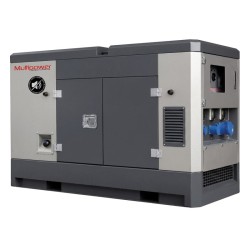
Multipower MY40ISS - Ultra Silent Industrial Generator 42 kW
230/400V - 37.8 kW
4 cylinders
4-STROKE DIESEL
4 cylinders
4-STROKE DIESEL
Price on Request
description Quotation Request
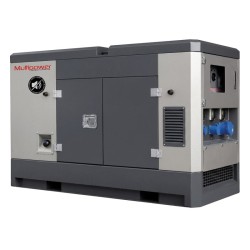
Multipower MY30ISS - Ultra Silent Industrial Generator 33 kW
230/400V - 29.7 kW
4 cylinders
4-STROKE DIESEL
4 cylinders
4-STROKE DIESEL
Price on Request
description Quotation Request
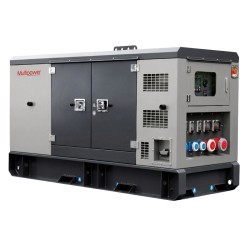
Multipower MY40IS - Silenced Industrial Diesel Generator 42 kW
230/400V - 37.8 kW
4 cylinders
4-STROKE DIESEL
4 cylinders
4-STROKE DIESEL
Price on Request
description Quotation Request
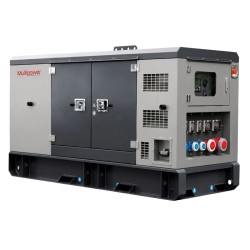
Multipower MY30IS - Silenced Industrial Diesel Generator 33 kW
230/400V - 29.7 kW
4 cylinders
4-STROKE DIESEL
4 cylinders
4-STROKE DIESEL
Price on Request
description Quotation Request
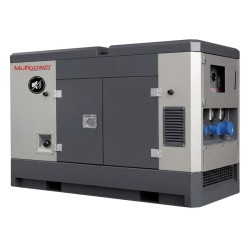
Multipower MY40YSS - 43 kW Silent Diesel Generator
230/400V - 38.7 kW
4 cylinders
4-STROKE DIESEL
4 cylinders
4-STROKE DIESEL
Price on Request
description Quotation Request
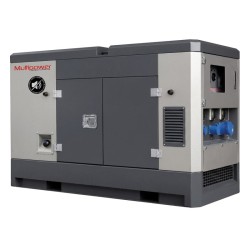
Multipower MY30YSS - Silenced Industrial Diesel Generator 33 kW
230/400V - 29.7 kW
4 cylinders
4-STROKE DIESEL
4 cylinders
4-STROKE DIESEL
Price on Request
description Quotation Request
Buying Guide
How to choose a generator? A guide to choosing a generator.
In this guide, we'll explain how to choose the best brands on the market based on your specific needs. Generators include Honda , Genmac , Tecnogen , Airmec , Hyundai , and Vinco ; from inverters to traditional electric generators , silent , single-phase , three-phase , compact, trailer-mounted, and more. If you already have a clear idea of which generator to buy , use the advanced search filters to find the generator you're looking for quickly and easily.
Which Generator to Choose?
The main feature to consider is definitely the purpose, understood as use, of the generator . Do I need to use it occasionally during my free time, or do I need to use it for several consecutive hours a day? What do I need to power? How much power do I need?
If you're already an expert in generators and know what to look for, try the advanced search now by selecting the filters that best suit your needs. If you're still unsure, continue reading this guide, or contact us for guidance from our generator experts. They'll be happy to help you choose the generator that best suits your needs.

What should I feed?
There are three types of load : resistive, reactive and electronic.

Resistive Load
These are the simplest loads to connect to a generator because they have stable electricity consumption (they don't require extra power at start-up) and the performance of the equipment doesn't depend on the quality of the electricity supplied (waveform, voltage, and frequency). Examples of resistive loads include light bulbs, toasters, and electric heaters.

Reactive Load
This sector includes electric motors . Performance is highly dependent on the quality of the electricity (waveform, voltage, and frequency) . If the values are incorrect, the equipment is subject to vibration and poor performance. Problems that arise in these cases include the inability to reach maximum speed or the correct torque, resulting in overheating and a reduced motor life. Reactive loads also require greater starting power (two to five times the nominal power). Examples of reactive loads include drills, saws, pressure washers, refrigerators, and air conditioners.

Electronic Loads
Electronic equipment is highly sensitive to the quality of the electrical power it absorbs and requires high stability. Examples of electronic loads include computers, televisions, and hi-fi systems.
Required Power Quality
Regardless of the type of load connected, a good-quality electricity supply improves the performance and reliability of the connected equipment . Electronic loads in particular, if powered by poor-quality generators, are prone to failure . To stabilize the output voltage and frequency, generators can adopt three types of solutions: capacitor or inductive, with an AVR card, and with an inverter.

Condenser / Inductive Generator Set
It is the simplest and most popular solution in the industrial field. It is characterized by high reliability and is primarily suitable for resistive loads.

Inverter Generator Set
Inverter generators provide high-quality power that is independent of engine speed. Inverter generators enable the construction of compact generators with alternators half the size of traditional systems and are ideal for powering highly sensitive and sophisticated electronic equipment . Inverter generators can provide high-quality power for both reactive and electronic loads and ensure the best performance and longest lifespan of the equipment. Other benefits of using inverters include reduced noise, lighter weight, and fuel savings.

Generator with AVR card
It is an automatic voltage and frequency regulation device that minimizes fluctuations due to load variations. AVR technology significantly improves the performance and lifespan of equipment with reactive loads .

CycloConverter
It's a Honda-patented technology that, compared to the standard inverter system, uses a simplified system capable of providing higher-quality electricity than systems with AVR boards. In this system, electricity production is not directly linked to the engine's rotation speed.

Generator Power kW and kVA
Knowing the difference between kilowatts (kW) and kilovolt amps (kVA) is useful for more precisely determining the application of a generator. To put it simply, these are two units of measurement used to indicate:
- in the case of kVA the apparent power
- in the kW case the real power
In DC circuits, kVA are equal to kW because the voltage and current do not move out of phase. However, in AC circuits, the voltage and current may be out of phase. This phase shift, called Power Factor or Cos-fi, depends on the type of load being powered and tends towards 1 the more resistive the load is (such as light bulbs, toasters, heaters, etc.). For reactive loads (electric motors, pressure washers, welders, etc.), however, the power factor can also assume values much lower than unity, such as 0.8, 0.7, or even 0.6 .

Calculation example with resistive load
Assuming that you need to power an active power of 10kW if the user is of the resistive type, with a cos-fi power factor equal to 0.9, a 13kVA generator is more than sufficient since 13*0.9=11.7 kW leaves a margin of 1.7kW on the maximum power.
Calculation example with reactive load
If, however, we assume a 10kW user consisting of an electric motor or an industrial machine that uses many electric motors with a power factor of 0.7, the 13kVA generator will no longer be sufficient since 13*0.7=9.1kW. In this case, a generator of at least 16kVA will be required since 16*0.7=11.2kW.
How much power do I need?
To calculate the required power, in addition to taking into account the cos-fi power factor of the type of equipment you will be powering, if the load is reactive, such as electric motors, you must pay attention to the inrush current they require for start-up.
For a simple and quick calculation of the required generator power, the following formula can be used:
Power Required = P x K x 1.25
- P = Nominal power in kW
- K = Starting Coefficient (see table below)
- 1.25 = Safety Coefficient

Starting coefficients table
| Incandescent light bulb | 1 |
| Electric Stove / Hot Plate | 1 |
| Coffee Machine | 1.5 |
| Computer | 2 |
| Cash register | 2 |
| Home Drill | 2 |
| Grinders | 2 |
| Circular saws | 2 |
| Planer / Sander | 2 |
| Energy saving lamp | 2 |
| Microwave Oven | 2 |
| Vacuum | 3 |
| Microwave Oven | 2 |
| Vacuum | 3 |
| Professional Drill | 3 |
| Concrete mixer | 3 |
| Air Heating | 3 |
| Domestic Compressors | 3 |
| Refrigerator / Freezer | 3 ÷ 4 |
| Washing machine | 3 ÷ 4 |
| Air conditioners | 4 ÷ 5 |
| Professional Compressors | 4 ÷ 5 |
| Welders | 4 ÷ 5 |
Petrol, Diesel and Gas Power Generator
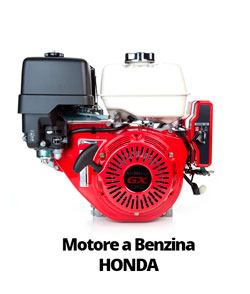
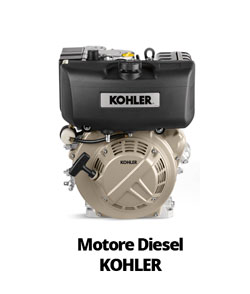
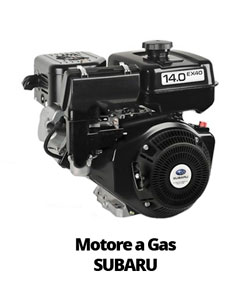
Diesel , petrol , or gas-powered generators are available for every type of fuel. Petrol-powered generators are typically the most widely used because they require less maintenance , are lighter, and are quieter . Diesel-powered generators are also more durable, lasting longer than petrol-powered ones. Diesel generators are generally preferred due to their large displacement and high electrical power requirements. Less common, but still valid alternatives, are LPG or methane-powered generators, depending on the situation.
Silent Power Generator
When the generator is to be used in "quiet" areas , where minimal noise pollution is required, silenced generators are the recommended choice. Pay attention to the manufacturers' declaration methods, which can often vary significantly.
Some people use the actual sound power at 1 meter away, others the sound power at 7 meters, and still others even at 7 meters with the generator at 70% load. It's therefore clear from the outset that the declared values should be taken with a pinch of salt .
Acoustic power is measured in dB , for reference here are some examples :
- The background noise of a normal apartment is around 40 dB(spl) at night and 50/55 during the day.
- A normal conversation between two people has a value (at one meter distance) of approximately 65 dB(spl).
- Heavy car traffic on a ring road also used by trucks reaches approximately 90 dB(spl) at 10 metres from the road.
Inverse distance law
Doubling the distance from a sound source results in a drop in dB of 6 , while halving the distance results in an increase in sound pressure of approximately 6 dB. In short, moving another 7 meters away from the generator reduces its noise by approximately 6 dB .

Power Generator Options
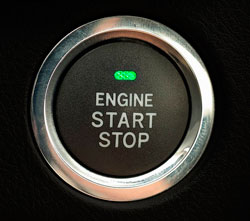
Electric Start
Electric generators come complete with a battery for electric start with a key for quick, easy, and convenient starting. Keep in mind that batteries need to be charged periodically to ensure longevity. If you'll only be using the generator once a year, a battery is not a good choice for battery life. Of course, all electric-start generators, especially semi-professional and professional models, include a recoil starter.
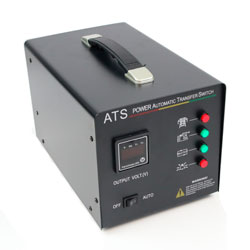
ATS Automatic Transfer Switch panel
What is an ATS electrical panel? It's a switch that automatically starts the generator in the event of a power outage . It's essentially an emergency device.
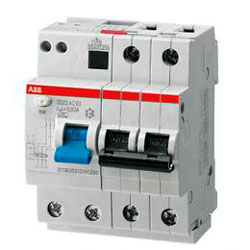
Differential switch (magnetothermic)
The differential switch, better known as a "life saver", is a safety switch that automatically opens the circuit by interrupting the flow of electrical current following its detection of any difference in electrical currents entering and exiting the electrical system in the event of a leak.
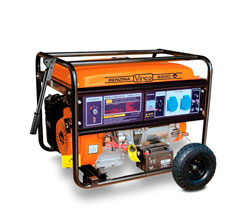
For Transport
Almost all generators over 50 kg can be supplied with a transport trolley. Some come standard with wheels (especially the silenced ones) or with a practical hook for cranes and lifting equipment.