Heat Recovery VMC Units for a Healthy and Energy-Efficient Home Environment

In recent years, attention to energy efficiency and indoor air quality in homes has grown significantly. Heat recovery units with Mechanical Ventilation with Heat Recovery (MVHR) represent an innovative solution to create healthy and energy-efficient home environments.

In this guide to buying a Heat Recovery Unit, we will explore the benefits, operation, and applications of heat recovery VMC units for domestic use.

What is a heat recovery unit

An MVHR heat recovery unit is a mechanical ventilation system that ensures constant and controlled air exchange inside a home. Its main goal is to guarantee a healthy environment and reduce heat loss by recovering thermal energy from the extracted air.

MVHR heat recovery units operate through a cross-flow ventilation system. Fresh air is taken from outside and filtered to remove impurities and allergens. At the same time, stale indoor air is extracted from bathrooms, kitchens, and other areas prone to humidity and pollutants. The fresh air and extracted air pass through heat exchangers, where thermal energy is transferred from the exhaust air stream to the supply air stream without mixing. In this way, a significant portion of previously lost thermal energy is recovered, preventing excessive heat loss or cooling.

heat recovery unit cross-flow ventilation diagram

Benefits of heat recovery

  • Indoor Air Quality:
    MVHR heat recovery units improve indoor air quality by removing humidity and pollutants such as pollen, dust, and odors, while providing constant controlled ventilation.
  • Energy Efficiency:
    Thanks to heat recovery, MVHR units reduce thermal energy loss and allow savings on home heating and cooling costs.
  • Thermal Comfort:
    By maintaining a thermally balanced indoor environment, MVHR heat recovery units help create consistent thermal comfort in all rooms of the house.
  • Humidity Reduction:
    Extracting humid air from bathrooms and kitchens helps prevent mold and condensation, thus protecting the building structure and the health of its occupants.
benefits of heat recovery MVHR system for home

Types of MVHR systems

Mechanical Ventilation with Heat Recovery systems ensure constant air exchange in indoor environments while minimizing energy consumption. To explain in detail how this works, it is necessary to distinguish between two types of MVHR: centralized MVHR and decentralized MVHR.

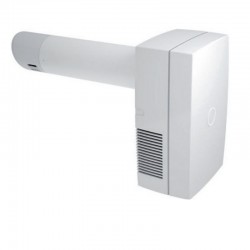
DECENTRALIZED MVHR HEAT RECOVERY

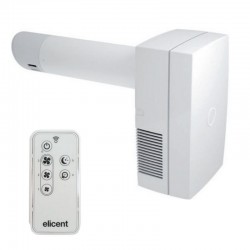
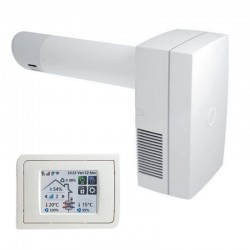
Decentralized alternating-flow MVHR is a type of heat recovery unit that works locally in the room where it is installed. In this case, heat recovery occurs by alternating the supply and extract airflow.
During the extraction phase, the fan extracts stale and humid air from the room. Its thermal energy is stored in the heat recovery unit and then expelled outside. Following that, the supply phase begins, during which the fan reverses its rotation, drawing in clean air from outside. The stored thermal energy is transferred to this incoming air, which is then filtered and reintroduced into the room.
Decentralized MVHR systems are ideal for homes where installing a centralized system is not possible or during major renovations.

Advantages:

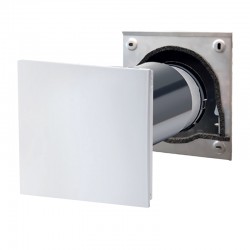
Installing a Decentralized MVHR Heat Recovery System is an efficient solution both economically and in terms of performance. This type of heat recovery is extremely easy to install and does not require complex installation work. Installation is done with a simple wall hole, without the need for complicated masonry work. Thanks to an umbrella-like opening and closing system on the external pipe, the device can be installed easily without scaffolding or external interventions, even for buildings on upper floors.

decentralized MVHR heat recovery unit wall installation

CENTRALIZED MVHR HEAT RECOVERY

Centralized ducted MVHR systems distribute outside air throughout the home via ductwork that delivers air to different rooms through vents. Generally, these systems consist of fans (one for supply and one for extraction) for air movement; a heat exchanger to recover thermal energy from stale air, which is then transferred to the incoming fresh air; and filters that prevent outdoor pollutants from entering the home.

centralized ducted MVHR heat recovery system diagram

Possible Applications

  • New Constructions:
    MVHR heat recovery units are often installed in new builds, ensuring a healthy and energy-efficient environment from the start.
  • Renovations:
    They can be easily integrated into existing homes during renovation work, improving indoor air quality and reducing energy costs.
  • Passive or Low-Energy Homes:
    MVHR heat recovery units are particularly suitable for passive or low-energy homes, where air exchange is necessary without compromising energy efficiency.
MVHR heat recovery applications in homes
MVHR heat recovery units for domestic use offer numerous advantages, including improved indoor air quality, increased energy efficiency, and optimal thermal comfort. Thanks to their intelligent operation that recovers thermal energy and controls airflow, these devices make it possible to create healthy and energy-efficient living environments. If you are looking to improve energy efficiency and air quality in your home, MVHR heat recovery units represent a cutting-edge solution well worth considering.
... read more

There are 8 products.

Showing 1-8 of 8 item(s)

Active filters

Back to top