
Comer Airless 1 - 227 bar Painting Pump - Ideal for 700 m2 per day
230V - 0.84 kW
227 bar - 162 L/h
14.5 kg
227 bar - 162 L/h
14.5 kg
€1,605.00

 AlphabeticalBrands
 Close
CloseChoosing an Airless paint pump doesn't simply mean buying the model with more bar, more power, or greater flow rate: two pumps can have the same maximum pressure but very different performance.
The right pump depends mainly on what you need to paint , what material you need to apply, what nozzle you need and how intensively you will use the machine.
To correctly choose an Airless paint pump, it is useful to start with these questions:
In this guide, we'll look at what features to evaluate and, above all, what type of Airless pump to choose based on the job at hand.
If you want to quickly identify the most suitable type of pump, you can start with these simple rules:
Surface area size is important, but it shouldn't be used to choose a pump based solely on maximum pressure. Painting a very large surface doesn't automatically mean you need more bar. To increase working speed, the pump's flow rate , the size of the usable nozzle, and the machine's ability to withstand continuous use generally become more important.
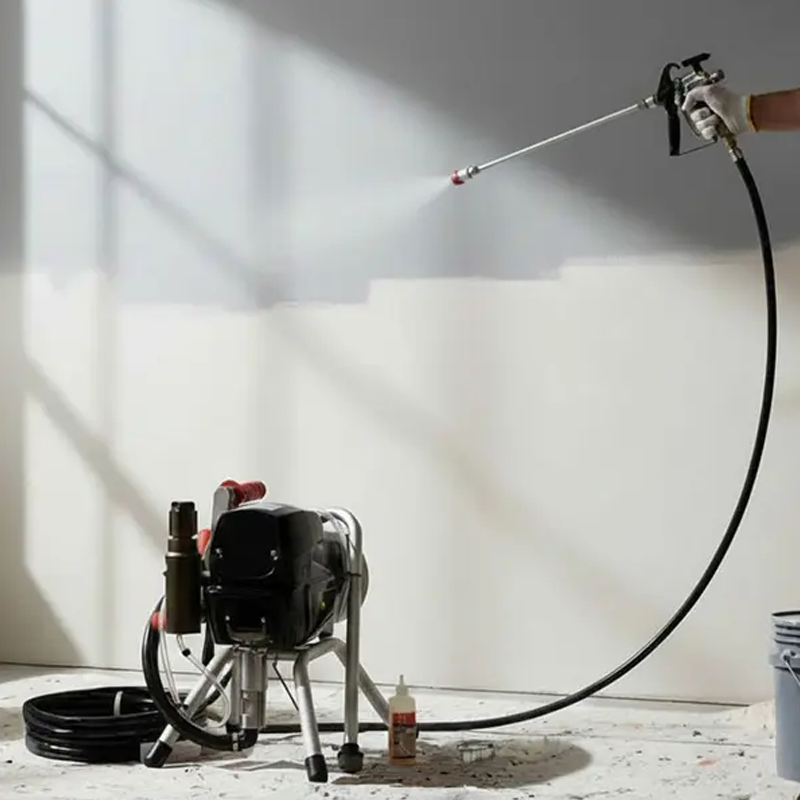
| TYPE OF PROCESSING | PUMP FEATURES RECOMMENDED PAINTING |
|---|---|
| Occasional painting of small surfaces | Low flow rate and compatibility with small or medium nozzles |
| Application of impregnating agents or fluid products | Good pressure control and compatibility with small nozzles |
| Painting doors, furniture or narrow elements | Compatibility with narrow fan nozzles |
| Painting of walls and medium surfaces | Compatibility with medium nozzles and adequate flow rate |
| Painting large walls or ceilings | Greater reach and support for wider fans |
| Frequent application of wall paints | Sufficient flow rate to support the recommended nozzle |
| Application of very dense materials | Compatibility with large diameter nozzles and specific material |
| Work on large construction sites | High productivity and continuous use capacity |
One of the most common questions is: how many bars do you need to paint?
The answer is that there is no one-size-fits-all barcode number.
The pressure required depends on:
A pump must be able to generate enough pressure to properly atomize the material through the chosen nozzle. First, identify the material you need to apply and the required nozzle . Only then should you verify that the pump can deliver the required pressure for that configuration.
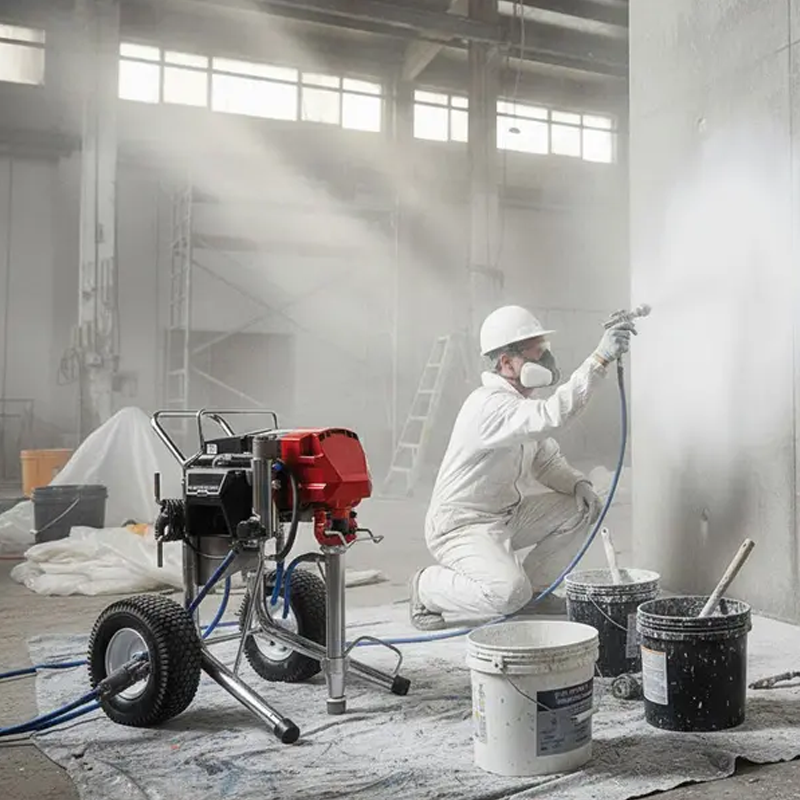
Flow rate is one of the most important parameters for understanding which pump to choose: it indicates the quantity of material that the pump can deliver in a given period of time.
In general, a greater range allows for:
Generally, a higher flow rate is needed when:
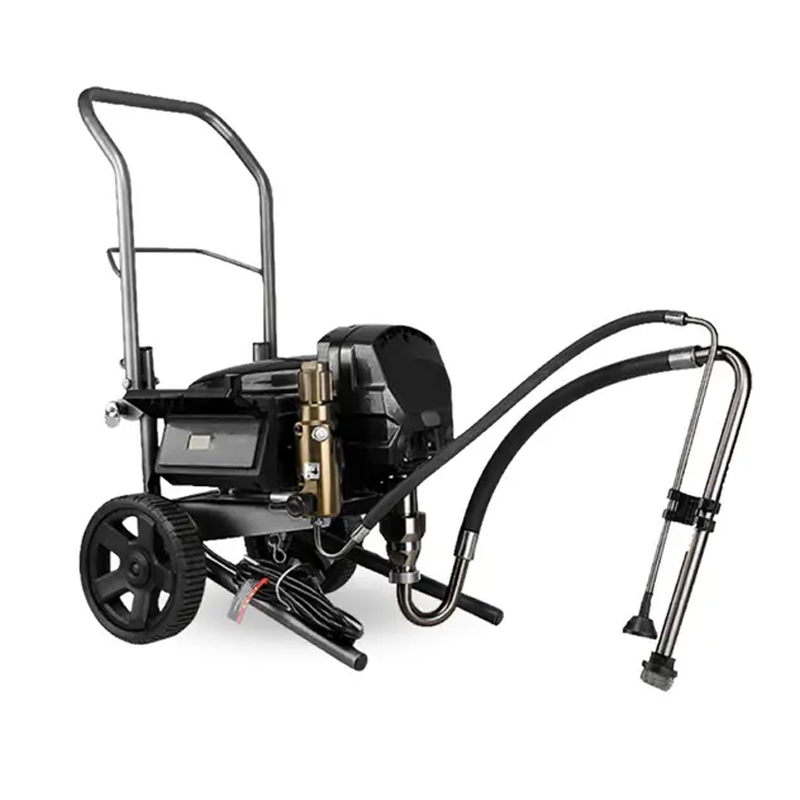
The material to be applied must be one of the first criteria for choosing a Paint Pump.
Don't choose an oversized pump just because it has a high flow rate. For finishing work, good application control and compatibility with small nozzles may be more important.
For paints and enamels, the choice depends on the product's viscosity and the desired finish. Generally, it may be necessary to use intermediate-sized nozzles. Make sure your pump is compatible with that size.
Wall paints generally require a larger amount of material than highly fluid products. Therefore, factors such as flow rate and the ability to work continuously become important.
As the material becomes more viscous, the demands on the pump increase, requiring greater flow capacity, higher pressure, and compatibility with large nozzles.
In conclusion, the best Airless Pump is not the one with the highest bar or flow rate, but the one that can properly handle the material, nozzle, and type of work you need to do. Our advice is to choose the pump based on the most demanding material and nozzle you actually plan to use, not simply the largest surface area you need to paint or the bar pressure indicated on the technical data sheet.


