



 AlphabeticalBrands
 Close
Close



Best Sellers
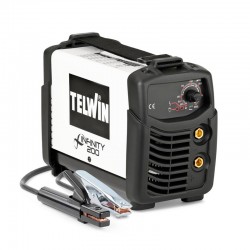
Telwin Infinity 200 - Inverter Electrode Welder - complete with accessories
230V - 5.6 kW
10÷200 A
MMA - TIG
10÷200 A
MMA - TIG
€306.00
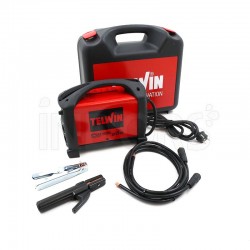
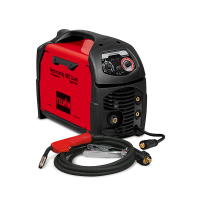
Telwin Technomig 180 Dual Synergic 230 V - Inverter Welding Machine cod. 816075
230V - 3.2kW
20÷170 A
MIG - MAG - MMA - TIG
20÷170 A
MIG - MAG - MMA - TIG
€695.00
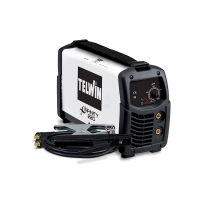
Telwin Infinity 220 - MMA and TIG welding machine in DC cod. 816082
230V - 6 kW
20÷200 A
MMA - TIG
20÷200 A
MMA - TIG
€366.00

Kask Zenith X - Safety Helmet
EN 397 - 50365
Shipbuilding industry
Electrical work under tension
Shipbuilding industry
Electrical work under tension
€71.40
€84.00
-15%
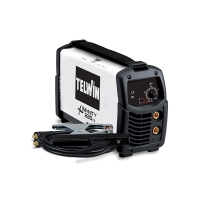
Telwin Infinity 228 CE - Inverter Welding Machine for Cellulose Use cod. 816084
230V - 6 kW
20÷200 A
MMA - TIG
20÷200 A
MMA - TIG
€406.00
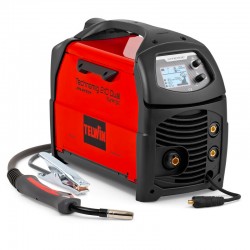
Telwin Technomig 210 Dual Synergic - Multiprocess Wire Welding Machine
230V - 5kW
20÷200 A
MIG-MAG/FLUX/BRAZING/MMA/TIG
20÷200 A
MIG-MAG/FLUX/BRAZING/MMA/TIG
€824.00
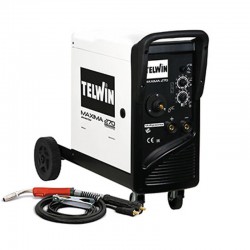
Telwin Maxima 270 - Multiprocess Inverter Welding Machine - Cod. 816126
230V - 6.3 kW
20÷250A
MIG-MAG/BRAZING/MMA/TIG
20÷250A
MIG-MAG/BRAZING/MMA/TIG
€1,080.00

Telwin Technomig 215 Dual Synergic - Multiprocess Inverter Welding Machine
230V - 5kW
20÷220A
MIG-MAG/FLUX/BRAZING/MMA/TIG
20÷220A
MIG-MAG/FLUX/BRAZING/MMA/TIG
€1,040.00
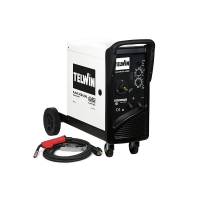
Telwin Maxima 230 Synergic - Multiprocess Welding Machine cod.816234
230V - 4.8 kW
20÷220A
MIG - MAG - MMA - TIG
20÷220A
MIG - MAG - MMA - TIG
€898.00

Telwin Infinity Plasma 40 - Compressed Air Welding Machine cod.816145
230V - 4 kW
10÷40 A
PLASMA
10÷40 A
PLASMA
€659.00
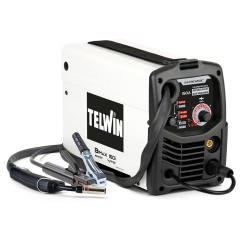
Telwin BIMAX 150i Synergic - Multiprocess inverter welding machine
230V - 2.65 kW
20-150 A
MIG-MAG/ FLUX/ MMA
20-150 A
MIG-MAG/ FLUX/ MMA
€458.00
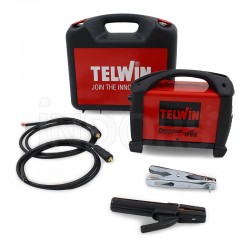

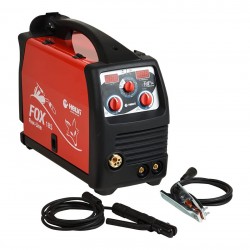

Telwin Maxima 160 Synergic - Microprocessor Inverter Welding Machine - Cod. 816085
230V - 2.6 kW
20÷150A
MIG - MAG
20÷150A
MIG - MAG
€528.00

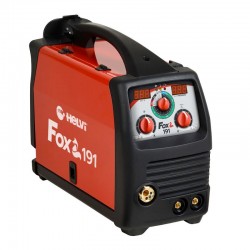
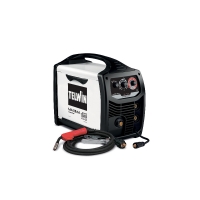
Telwin Maxima 200 Synergic - Inverter Wire Welder code 816087
230V - 3.2kW
20÷170 A
MIG - MAG - MMA - TIG
20÷170 A
MIG - MAG - MMA - TIG
€677.00
Buying Guide
Continuous wire welder
The continuous wire welders are particularly suitable in all those cases where high productivity and optimal welding quality are required. The professional continuous wire welders use, depending on the material to be welded, a specific combination of Hydrogen and Gas (Argon) to protect the weld pool, making the weld bead with a perfect finish free of slag. The high productivity is given by the coil of the metal wire which supplies the necessary material for the creasing of the weld in a continuous way.

The only limitation of the continuous wire welders is the use in the presence of wind that would divert the escape of the shielding gas. However, this limit is easily overcome by using the so-called "cored wire" which is none other than the metal wire of the coil, coated as occurs for the electrodes in MMA welding. Keep in mind that with cored wire you will not have the same finish as gas welding, and that cored wire coils are very expensive compared to classic uncoated ones. Under gaseous protection it is normally welded with the wire in positive polarity, while when welding in NO-GAS mode it is necessary to connect the torch to the negative polarity of the welding circuit.

The melting of the wire leads to the detachment of drops of molten metal which are transferred into the weld pool; as the current changes, the size and quantity of drops that detach over time also vary, consequently the method of transferring the metal takes on different names:
- Spray transfer (Spray Arc)
- High Current
- More than 50 small drops per second
- High deposition rate of filler metal
- Suitable for working on not thin thicknesses
- Immersion transfer (Short Arc)
- Low Current
- Creation of a liquid bridge between the wire and the metal to be welded
- Suitable for working on thin thicknesses
- Pulsed Arc Transfer
- Modulated current with average value between the values of the Short Arc and Spray Arc regimes
- A suitable pulsed current generator is required
- Control of the detachment of every single drop
- Precise management of heat input, necessary to avoid breakthroughs when welding metals with high thermal conductivity (aluminum and its alloys)
- Suitable for working on thin thicknesses
- Aesthetically valid results in visible welding
If you are in the current range between the values of the immersion and spray transfer and you do not have a pulsed current generator, the transfer occurs in a disordered way with large and variable droplets: this regime is called globular regime (Drop Arc) , a modality that we try to avoid as the electric arc is difficult to manage and the welding generates many sprays.
Continuous Wire Welder Video Guide Deca
Video guide offered by Deca to introduce you to the purchase of your continuous wire welding machine.
With wire welders it is possible to weld Steel, Stainless Steel, Aluminum and Bronze, taking into account the percentages of Hydrogen and Oxygen shown in the table below:
| Material | Way | CO 2 | ARCO 2 80/20 | ARCO 2 82/18 | ARCO 2 92/8 | ARCO 2 98/2 | ArO 2 98/2 | Ar |
| Steel | Short / Spray Arc | No Spray Arc | - | - | - | - | ||
| Pulsed Arc | - | - | - | - | ||||
| Stainless steel | Short / Spray Arc | - | - | - | - | |||
| Pulsed Arc | - | - | - | - | ||||
| Aluminum | Short / Spray Arg Pulsed Arc | - | - | - | - | - | - | |
| Bronze | Short / Spray Arg | - | - | - | - | - | - | |
| Brazing | Short / Spray Arg Pulsed Arc | - | - | - | - | - | - |
Terminologies Useful for the purchase of the Continuous Wire Welder
B.C
AC
A.D
Direct current
2AC
Double Output Alternating Current
Duty Cycle
The Duty Cycle is the number of minutes in a 10 minute interval during which a welding machine can work continuously on a current date. The Duty Cycle relative to the maximum current depends on the temperature at which it is measured; Telwin declares all Duty Cycles at an ambient temperature of 40 ° C.
MIG Brazing
It allows to operate at temperatures lower than MIG welding (1000 ° C instead of 1500 ° C) with less deformation problems of the welded elements. The materials are joined by the fusion of the filler material only. Wide application in the automotive sector.
Post Gas
It controls the gas flow after the end of the welding, guaranteeing the cooling of the material in an area protected from oxidation.