
 AlphabeticalBrands
 Close
Close
230 V - 2x0.75÷2x7.5 kW
60÷600 L/min - Prevalence 27÷120 m
 Warranty 2 years
 Shipped on Pallet



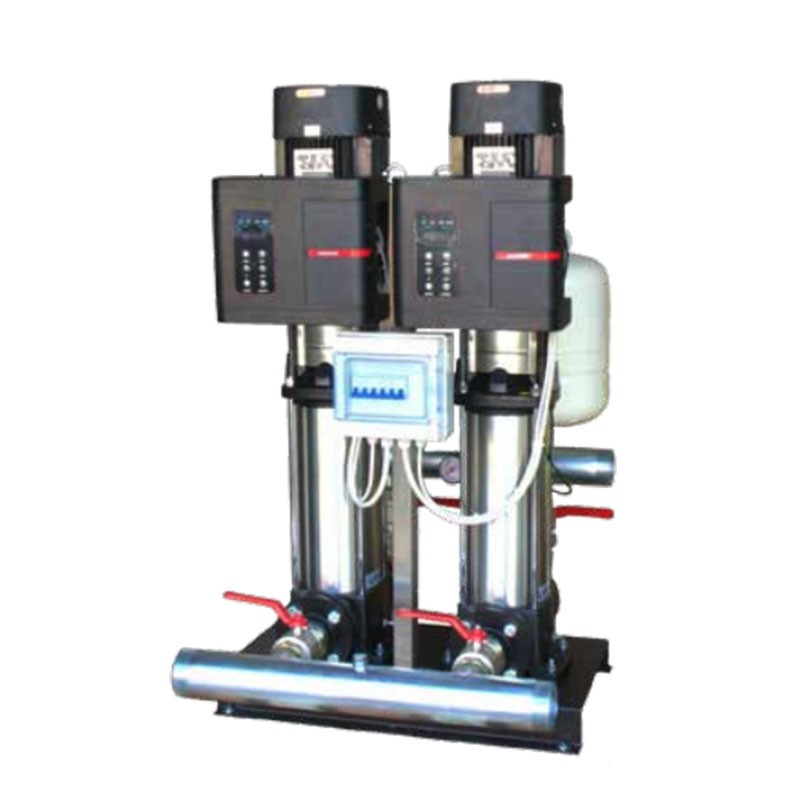
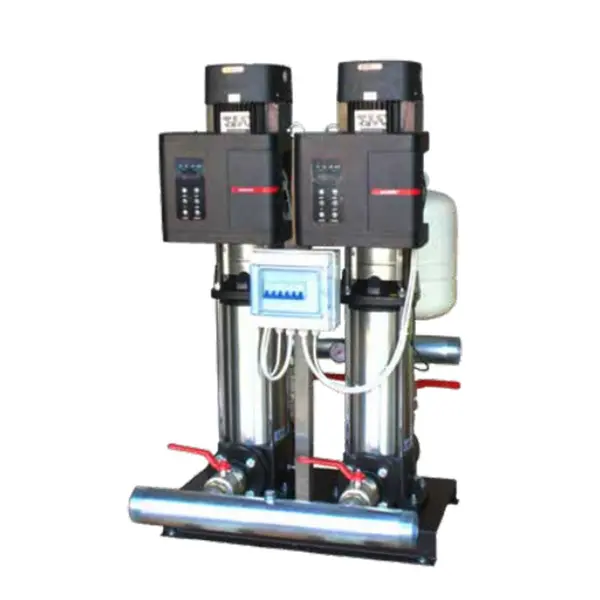
The Leo GP-2E three-phase pressurization system is designed to ensure reliable water distribution at constant pressure in civil and industrial contexts and in irrigation systems. It is composed of two monobloc electric pumps, horizontal or vertical, installed on a single base in press-formed sheet metal with epoxy paint. Each pump is equipped with a three-phase 400V PDH30 frequency inverter , mounted directly on the motor or on dedicated supports, to power induction electric motors connected to 400V star, with a maximum power of 7.5 kW .
This system allows precise pressure control and high energy efficiency, making it ideal for applications where continuity of service and optimization of consumption are required . The inverter configuration ensures intelligent and adaptable operation, improving system performance and extending the life of the pumps.
Works in combination with a pump
This inverter system is compatible with:
The unit is assembled on a press-formed sheet metal base, painted with epoxy resins to resist corrosion. Two monobloc electric pumps are installed on this structure, available in horizontal (EMH, 2AC series) or vertical (EVP, LVR series) configuration, depending on the system needs. Each pump is equipped with a three-phase 400V PDH30 inverter , mounted directly on the motor or on dedicated supports, capable of powering induction motors connected to 400V star, with a maximum power of 7.5 kW.
The 400V three-phase PDH30 inverters allow you to power delta-connected electric motors, up to a power of 7.5 kW. These devices regulate the frequency and output voltage to adapt the pump speed to the water requirement, maintaining a constant pressure. In addition, the Leo GP-2E system is equipped with a watertight control unit with IP65 protection , complete with sectioning switches and internal terminals for connecting the minimum level float.
A pressurization system is designed to keep the water pressure in a distribution network stable, regardless of flow rate variations or the number of active users. The pumps, controlled by inverters and regulated by pressure transducers, increase the incoming water pressure and distribute it evenly. When demand decreases, the inverter reduces the motor speed to avoid wasting energy. In the event of a pressure drop below the set limit, the system reacts by increasing the power of the pumps until the balance is re-established. Suitable for:
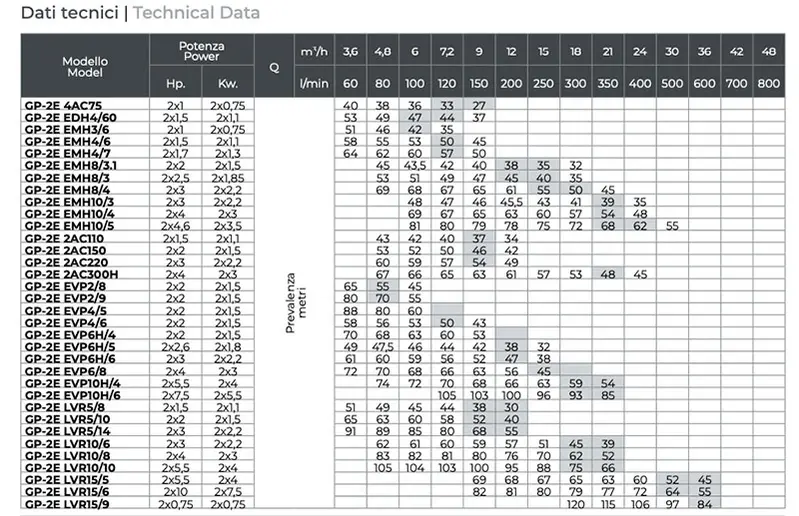
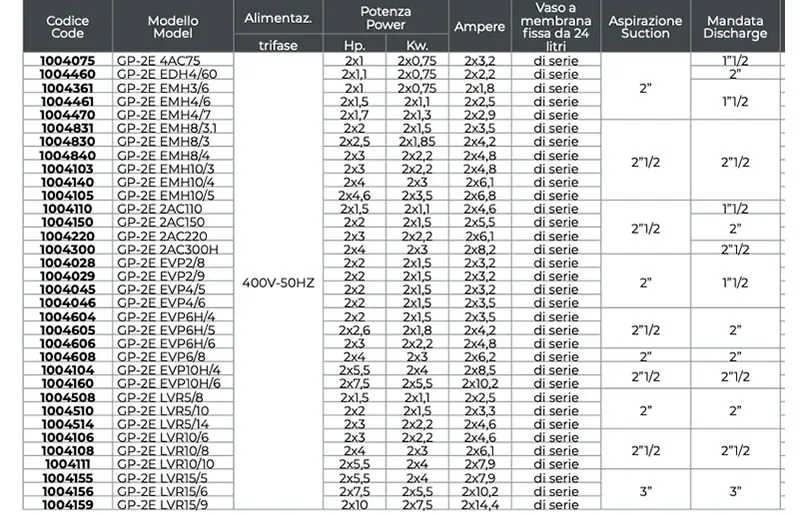
Please indicate the desired model when placing the quote

 View Full Guide